Sector 72 vs Sector 94 Noida: A Commercial Location Comparison
A neutral, evidence-led comparison of Sector 72 and Sector 94 Noida for commercial decisions: connectivity, metro access, land-use character and the asset types each supports.
- Author
- Aarav Sharma
- Category
- Comparisons
- Date
- April 21, 2026
- Reading time
- 14 min

Answer: Neither sector is universally better for commercial: Sector 72 and Sector 94 in Noida answer different commercial briefs, so compare them against one written scorecard rather than a headline. Sector 72 is an established, mixed-use central Noida locality near Dadri Road, best read as a neighbourhood catchment with Aqua Line access at Noida Sector 51 and a nearby employment belt around Sector 63. Sector 94 sits at Noida's Delhi-facing gateway near the DND Flyway, the head of the Noida-Greater Noida Expressway and the Okhla Bird Sanctuary metro station on the Magenta Line, a low-density, high-visibility zone built around large-format landmark developments. Decide by matching the sector to your specific job (retail catchment, destination office, or long-hold investment) and verify tenure, sanctioned use, RERA and current circle rate against official sources before you commit.
Independent guide: we do not quote live prices, approvals or returns. Verify project-specific facts against current official documents before acting.
Start with the job, not the sector
The question "Sector 72 or Sector 94 for commercial?" has no context-free answer, because the two localities are built for different commercial jobs. A small high-street retail unit, a destination office that customers travel to, and a long-hold investment do not share a scorecard. Before you shortlist a plot in either sector, write down what the location must actually do: whose footfall it must capture, how employees and customers will arrive, and over what horizon you need the asset to perform.
Both sectors sit in Gautam Buddh Nagar district, Uttar Pradesh, on land administered by the New Okhla Industrial Development Authority (NOIDA). That single fact carries two decision-relevant consequences that apply equally to Sector 72 and Sector 94: authority-allotted land is predominantly leasehold with transfer, sub-lease and permitted-use conditions set by the authority, and any project above the statutory threshold must be registered with UP RERA before it is marketed. The location comparison that follows changes what you can lease and to whom; the diligence stays constant.
Treat this article as a comparison framework, not a recommendation of either sector or any project in it. Every price, rent, circle rate and possession date you will eventually need is time-sensitive or plot-specific, so we point you to the official source for each rather than quoting a figure that would be wrong by the time you read it.
Where each sector actually sits
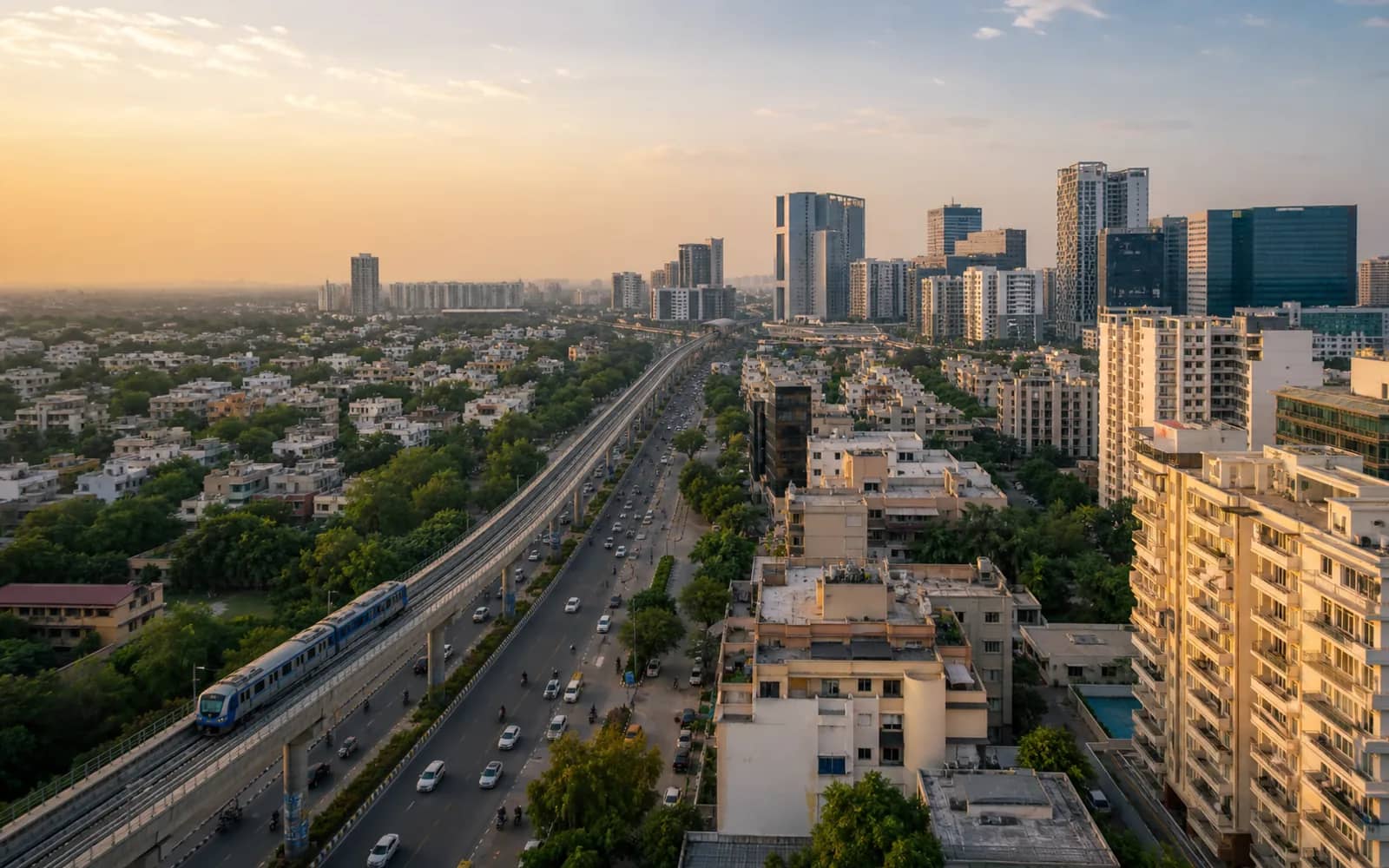
Sector 72 is a central Noida locality near Dadri Road, surrounded by the residential and mixed-use sectors of the 70s belt and within easy reach of the Sector 63 employment and light-industrial zone. Its commercial character is the everyday kind: neighbourhood retail, small offices and ground-floor commercial attached to residential clusters, serving a resident and local-worker catchment that is already in place. You are buying into a settled, occupied part of the city rather than an emerging frontier.
Sector 94 sits at the opposite end of the spatial logic. It occupies Noida's Delhi-facing gateway, immediately adjacent to the DND Flyway and the Kalindi Kunj approach from South Delhi, at the head of the Noida-Greater Noida Expressway and bordering the Okhla Bird Sanctuary along the Yamuna. It is a low-density zone defined by large landmark developments and green frontage rather than dense street-level retail, and its natural catchment is pass-through and destination traffic entering or leaving Noida, not a captive local neighbourhood.
That contrast (an established interior catchment versus a high-visibility edge) is the core of the commercial decision. Sector 72 rewards businesses that live off nearby residents and workers; Sector 94 rewards businesses that can pull footfall from a wider Delhi-and-expressway audience and that benefit from prominence and arrival visibility.
Metro and road access compared
Access is where the two sectors diverge most concretely, so verify the current position for your exact plot on the operator maps before relying on it. For Sector 72, the nearest metro is Noida Sector 51 on the Aqua Line, operated by the Noida Metro Rail Corporation (NMRC), with a walkable interchange between Sector 51 (Aqua) and Sector 52 (Delhi Metro Blue Line). That gives Sector 72 a commuter-grade link into both the NMRC network toward Greater Noida and the Blue Line toward Delhi, which supports an office or workforce use as much as a retail one.
Sector 94 is served by the Okhla Bird Sanctuary station on the Delhi Metro Magenta Line, with the Botanical Garden interchange (Blue and Magenta lines) close by and Kalindi Kunj station on the same corridor. Its road story is stronger still: direct access to the DND Flyway and the start of the Noida-Greater Noida Expressway, and proximity to the wider corridor network including the Yamuna Expressway further south. This makes Sector 94 unusually car-and-corridor accessible for a destination business, while its metro link is a single Magenta Line station rather than an interchange on your doorstep.
In short, Sector 72 offers embedded, everyday public-transport access for a local catchment, while Sector 94 offers gateway road connectivity and Delhi-facing reach. Confirm walking distances and current station status on the NMRC and Delhi Metro (DMRC) network maps, because distances and interchanges change as lines extend.
Land-use character and the asset types each supports
The physical fabric of each sector limits what you can realistically buy and lease. Sector 72's commercial stock tends toward smaller footprints: high-street and neighbourhood retail, compact offices, and commercial units integrated with residential development. If your business needs a modest unit near an existing resident base, with lower entry ticket and a shorter path to occupancy, this is the profile that fits.
Sector 94 is characterised by large, high-visibility mixed-use and commercial-institutional developments set in a low-density, green-fronted context. The asset types on offer skew toward larger-format towers, premium offices and prominent frontage suited to a destination or flagship use. That prominence comes with a larger cheque, a specialised buyer and tenant pool, and a dependence on the destination catchment materialising rather than on captive local demand.
Neither profile is superior; they are different products. A retailer chasing daily convenience spend will usually be mismatched in a low-density gateway zone, and a business that needs arrival visibility and a large floorplate will usually be mismatched in a settled neighbourhood high street. Match the asset type to the job you defined at the start.
Sector 72 vs Sector 94 at a glance
The table summarises how the two sectors typically differ across the dimensions that decide a commercial choice. Treat every row as a hypothesis to confirm for your specific plot and against current official sources, not a fixed fact, because access, use and value all change over time.
| Dimension | Sector 72 Noida | Sector 94 Noida |
|---|---|---|
| Position in Noida | Central Noida, near Dadri Road, surrounded by settled residential sectors | Delhi-facing gateway near DND Flyway, Kalindi Kunj and the expressway head |
| Nearest metro (verify current) | Noida Sector 51 (Aqua Line, NMRC); Sector 51-52 interchange to Blue Line | Okhla Bird Sanctuary (Delhi Metro Magenta Line); Botanical Garden interchange nearby |
| Road / corridor access | Near Dadri Road; Noida-Greater Noida Expressway reachable via inner sectors | Direct DND Flyway and expressway-head access; South Delhi via Kalindi Kunj |
| Land-use character | Established mixed-use with neighbourhood retail and compact commercial | Low-density gateway zone with large landmark mixed-use and green frontage |
| Typical asset type | High-street / neighbourhood retail, small offices, residential-linked units | Large-format mixed-use towers, premium offices, high-visibility frontage |
| Natural catchment | Resident and local-worker base, near the Sector 63 employment belt | Delhi-facing and expressway pass-through / destination traffic |
Match the sector to your commercial job
If the job is neighbourhood retail or a service business that lives on footfall from nearby residents and workers, Sector 72's embedded catchment and everyday access usually fit better, and the smaller unit sizes keep entry ticket and fit-out risk lower. Test the actual pedestrian counts, parking and the residual demand not already served by existing shops before you assume the catchment is yours.
If the job is a destination office, a flagship showroom, or a use that benefits from arrival visibility and Delhi-facing reach, Sector 94's gateway road connectivity and large-format stock are the stronger match, provided you can absorb a larger cheque and a narrower buyer and tenant pool. Do not price in a destination catchment that has not yet formed; verify who is actually travelling to the location today.
If the job is a long-hold investment, the axes shift to liquidity and tenant depth. Ask who the realistic next buyer or tenant is for that exact unit in that exact micro-market, and how long it would take to reach them at a price you would accept. A prominent Sector 94 asset can be harder to relet if the single anchor use leaves, while a modest Sector 72 unit may relet faster into a deeper local pool. Model both, and keep the reasoning behind your choice on record.
What to verify before you commit in either sector
The location comparison is only the shortlist stage; the binding facts sit in documents and official portals. Confirm the tenure and transfer conditions for the specific plot with the NOIDA Authority, because leasehold conditions on sub-lease and permitted use can decide whether your intended tenant is even allowed to operate there. This matters more for commercial units than most buyers expect.
Check the sanctioned land use and permitted commercial activity for the plot, again with the NOIDA Authority, since both sectors mix uses and a plot approved for one activity may not suit your tenant's business, signage, hours or power load. Verify the project on the UP RERA portal, matching the promoter entity, phase, registration validity and land details to the exact unit offered; registration is one evidence source and does not certify price, quality or delivery.
Finally, model the money from primary sources, not memory. Pull the current circle rate for the exact sector from the IGRSUP portal before estimating stamp duty and registration, confirm lease rent and transfer charges with the authority, and treat GST on any under-construction purchase as a point to check with a tax adviser and the CBIC GST portal. For any future corridor or metro extension, confirm status with NMRC or the relevant authority and do not price unbuilt access into either sector.
Test the downside before you sign
A robust commercial choice survives its pessimistic case. For a Sector 72 unit, model slower-than-hoped footfall, a competing high street nearby, and a reletting gap while you find a replacement tenant. For a Sector 94 asset, model a destination catchment that builds slowly, a higher fit-out and CAM burden on a large floorplate, and a narrower buyer pool at exit. If the decision only works on optimistic assumptions, it is fragile.
Build a single comparable evidence sheet for both candidates using identical fields and dated, first-hand observation: door-to-door travel from your real catchment at the time your business trades, operational status and handover definition, usable versus super area, total occupancy cost including CAM, and lease flexibility and exit conditions. Comparing like with like is what prevents a strong sales pitch or one headline rent from overriding the complete picture.
Record why one sector wins for your specific brief, with the score, the source and the inspection note behind each conclusion. Revisit that memo when a major assumption changes, a new metro station opens, a corridor status shifts, or a circle rate is revised, rather than reacting to marketing noise. The sector that wins on paper for someone else may lose for the job you actually need done.
Questions buyers and tenants ask
Is Sector 72 or Sector 94 Noida better for commercial property?
Neither is better in the abstract; Sector 72 suits neighbourhood retail and compact offices serving a local catchment, while Sector 94 suits destination or flagship uses that benefit from gateway road access and Delhi-facing visibility. Decide by matching the sector to your specific commercial job and verifying tenure, sanctioned use and cost against official sources.
Which metro line serves Sector 72 and which serves Sector 94?
Sector 72's nearest station is Noida Sector 51 on the Aqua Line (NMRC), with a walkable interchange to the Delhi Metro Blue Line at Sector 52, while Sector 94 is served by the Okhla Bird Sanctuary station on the Delhi Metro Magenta Line, with the Botanical Garden interchange nearby. Confirm current stations and walking distances on the NMRC and DMRC maps, as the network extends over time.
Is Sector 94 Noida only for large commercial projects?
Sector 94's stock skews toward large-format, high-visibility mixed-use and premium office developments rather than small high-street units, reflecting its low-density gateway character. Buyers wanting a modest neighbourhood unit typically find a closer fit in an established interior sector like Sector 72; confirm the exact unit sizes and sanctioned use for any plot with the NOIDA Authority.
Is commercial land in Sector 72 and Sector 94 freehold or leasehold?
Land allotted by the NOIDA Authority is predominantly leasehold, with transfer, sub-lease and permitted-use conditions set by the authority, and this applies to plots in both sectors. Confirm the exact tenure and transfer conditions for the specific plot with the NOIDA Authority before you model occupancy cost or leasing plans.
How do I check the circle rate and stamp duty for a commercial unit in these sectors?
Pull the current circle rate for the exact sector from the official IGRSUP portal (igrsup.gov.in), which publishes the property valuation lists used to compute stamp duty and registration, and cross-check notifications on the NOIDA Authority site. Do not model these from memory, as rates are revised and stamp duty is charged on the higher of consideration or the notified circle rate.
Should a planned metro or corridor extension change my choice between the two sectors?
Not as a present benefit; treat any proposed or under-construction metro extension or corridor as a dated scenario to verify with NMRC or the relevant authority, not as access you already have. Base the decision on connectivity that is operational today and confirm any future status before pricing it in.
How to verify this yourself
- Confirm the current nearest operational metro station and walking distance for the exact plot: Noida Sector 51 (Aqua Line, NMRC) for Sector 72 and Okhla Bird Sanctuary (Delhi Metro Magenta Line) for Sector 94, on the NMRC and DMRC network maps.
- Check the sanctioned land use and permitted commercial activity for the specific plot with the NOIDA Authority, since both sectors mix uses and an approved use may not match your tenant's business, signage, hours or power load.
- Verify tenure (leasehold vs freehold) and the transfer and sub-lease conditions for the plot with the NOIDA Authority before modelling occupancy cost or leasing to a third party.
- Pull the current circle rate for the exact sector from the IGRSUP portal before estimating stamp duty and registration, remembering the charge is on the higher of consideration or circle rate.
- Confirm the project's UP RERA registration, promoter entity, phase and validity on up-rera.in against the exact unit offered.
- Treat any future corridor or metro extension as a status to verify with NMRC or the relevant authority, and do not price unbuilt access into either sector's value.
Sources and where to verify
- UP RERA official portal (verify project registration)
- NOIDA Authority official website (tenure, land use, circle-rate notifications)
- IGRSUP: UP Stamps and Registration portal (circle rate, stamp duty)
- Noida Metro Rail Corporation (NMRC), Aqua Line
- Delhi Metro Rail Corporation (DMRC), Magenta and Blue lines