Ready-to-Move vs Under-Construction Property in Noida: Comparing 8 Factors, Not Price
Compare ready and under-construction Noida homes on inspection certainty, cash flow, delivery risk, financing, GST, customisation, rent and resale, not the headline price.
- Author
- Meera Chopra
- Category
- Home Buying
- Date
- July 11, 2026
- Reading time
- 12 min
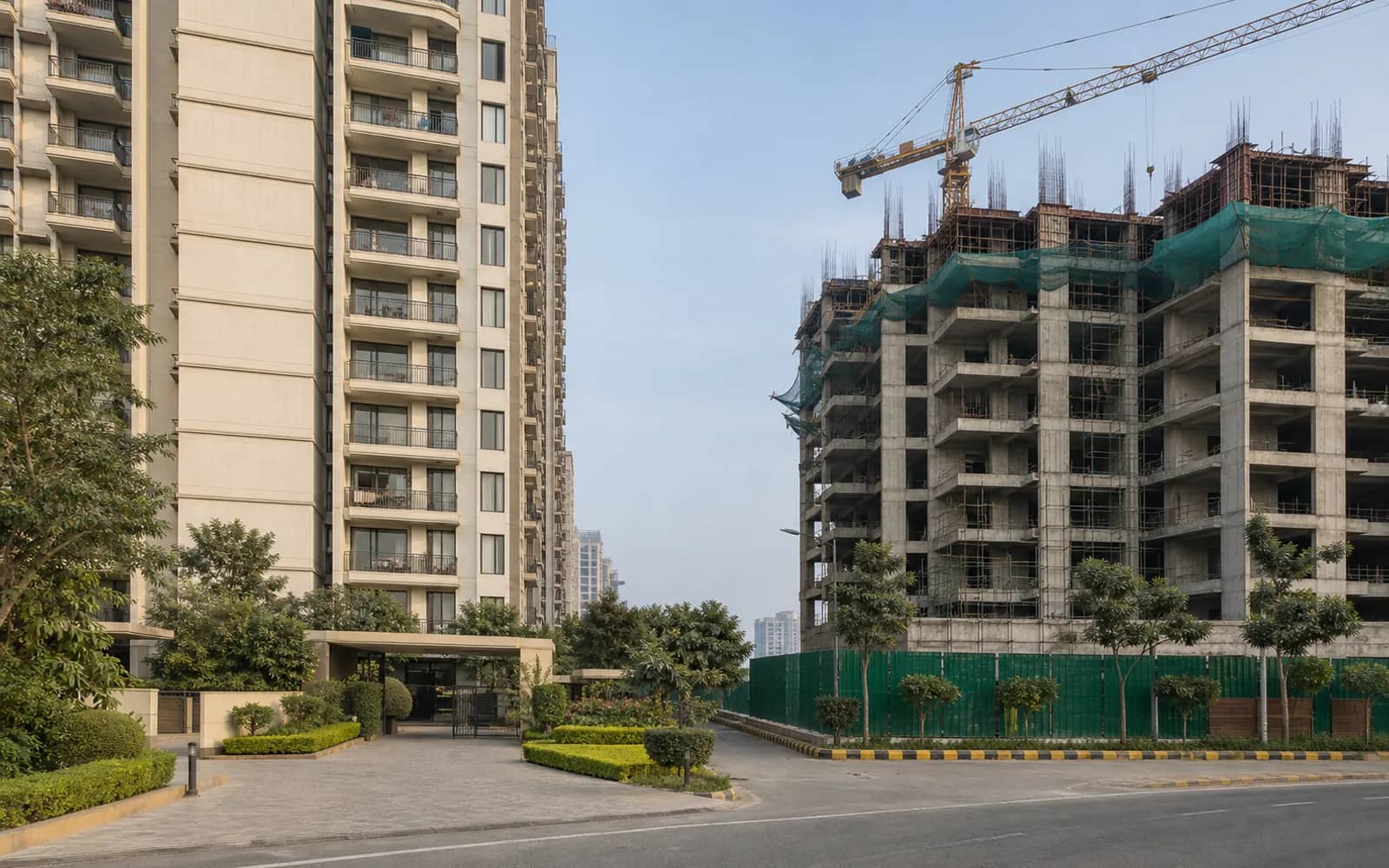
Answer: Ready-to-move property in Noida gives you an inspectable home, earlier use and no GST once a valid Occupancy or Completion Certificate has been issued and the entire price is paid after it, while under-construction property may offer wider choice and staged payments but adds completion, specification and timing risk plus GST on the purchase. The right choice is not decided by the headline price per square foot: compare the two exact units on inspection certainty, cash flow, delivery risk, financing, tax, customisation, rent and resale against your own move-in deadline and downside tolerance. Verify the building's legal status, UP RERA record and tenure before you rank either option.
Independent guide: we do not quote live prices, approvals or returns. Verify project-specific facts against current official documents before acting.
What "ready-to-move" actually means in Noida
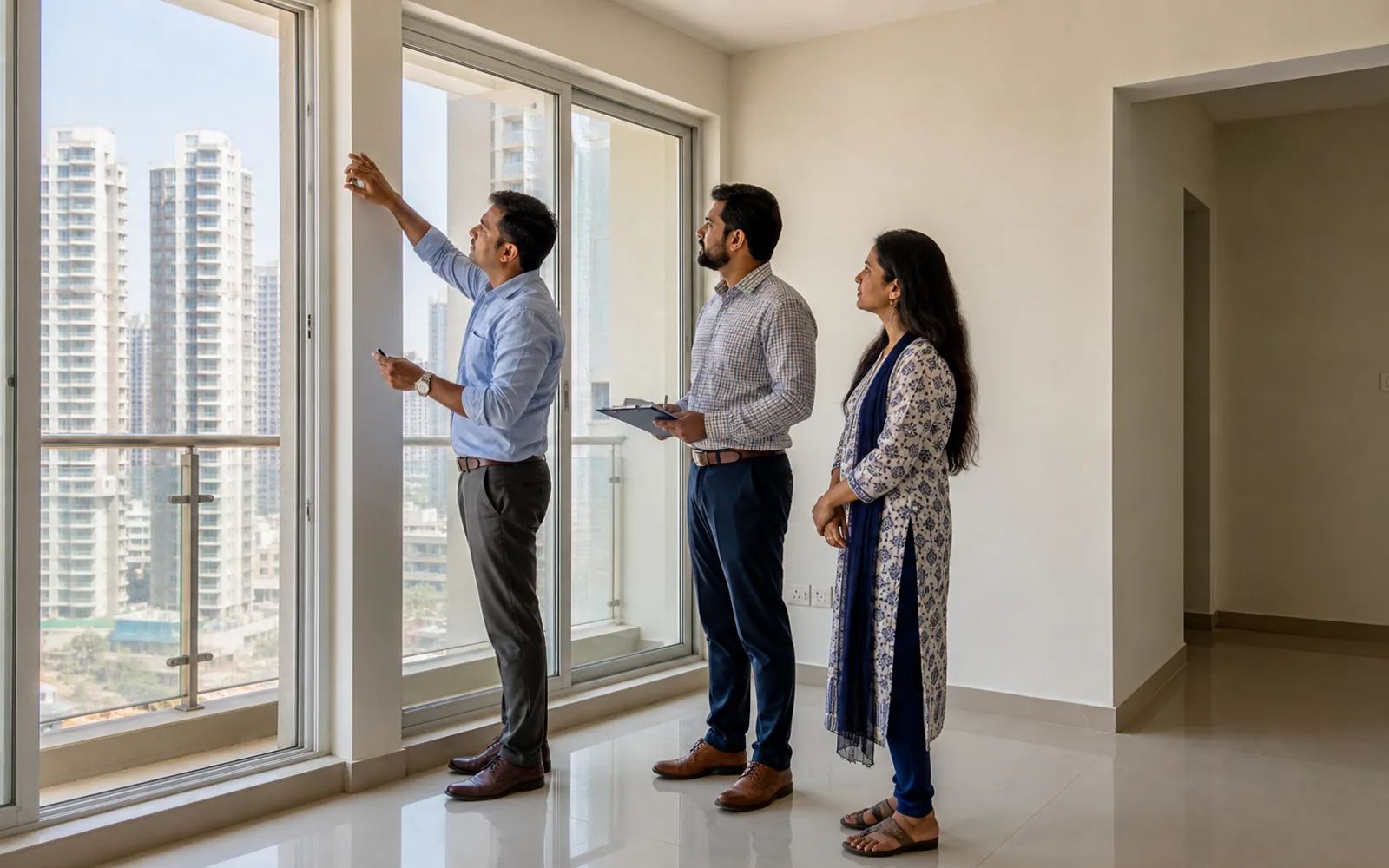
Ready-to-move is a legal status, not a visual one. A near-complete building, a furnished show flat or a sales brochure claim is not proof that your exact unit can be handed over and legally occupied. The decisive documents are the Completion Certificate (CC) and Occupancy Certificate (OC): confirm that a valid certificate has been issued and that it applies to your specific tower and unit, not merely to another phase of the same project.
This legal status also drives tax. Under Schedule III of the Central Goods and Services Tax Act, 2017, the sale of a completed building is treated as a transfer of immovable property and kept outside the scope of GST, but only when the entire consideration is received after the certificate is issued (or after first occupation). If any part of the price is paid before that certificate, the transaction can be treated as a supply of construction service and taxed. That timing condition is the precise reason a genuine ready-to-move home can attract no GST, while an under-construction one does.
Beyond the certificate, inspect what you are actually buying: the offered home, common areas, lifts, power backup, water, parking and how the facility is staffed and maintained day to day. Confirm tenure, because NOIDA and GNIDA land is largely leasehold, and check the no-dues position, IFMS and any pending authority dues on the plot. For a resale ready home, add building age, remaining lease period and structural condition to the list.
What under-construction adds to the decision
An under-construction purchase is a bet on future execution, so the evidence you need is different. Search the project and promoter on the UP RERA portal under district Gautam Buddh Nagar, and record the registration number, validity and declared completion date for the exact phase or tower that contains your unit, not the overall project brand. Treat the declared completion date as a disclosure the promoter must honour, not a guarantee that it will be met.
Pull the latest Quarterly Progress Report for your phase and reconcile it against a dated on-site observation. Map every dependency that sits outside your four walls: approach roads, water and power connections, sewage, common amenities, clubhouse and the delivery of other phases, because a finished flat in an unfinished complex is not usable. Any surrounding infrastructure that is still proposed or under construction should be treated as a dated scenario to verify, never as a benefit you can rely on today.
Finally, read how your money is exposed over time. Tie each payment milestone to a defined construction event, and review the builder-buyer agreement for the possession definition, delay compensation, area-adjustment rights, specification schedule and default clauses before you commit.
The eight-factor comparison at a glance
No single factor decides this choice; the two options trade strengths against each other. Ready-to-move buys certainty and speed, under-construction buys choice and staged cash outflow, and each carries a different risk. Use the table to compare the two exact units you are weighing, factor by factor, rather than reacting to the lower headline rate.
The table describes how each factor typically behaves; it deliberately avoids rupee figures, because prices, rates and taxes change and must be pulled from the primary sources named later. Fill in your own verified numbers against each row before you conclude.
| Factor | Ready-to-move | Under-construction |
|---|---|---|
| Inspection certainty | High: you can inspect the actual unit, view, light, noise, finish and common areas before paying | Low to partial: you rely on the sample flat, floor plan, specification schedule and contract remedies |
| Cash flow | Faster and front-loaded: near-full payment, registration and fit-out are due close together | Staged over milestones, but rent and loan outflow can overlap until handover |
| Delivery risk | Largely resolved once a valid OC or CC exists for your tower | Present: schedule slippage, specification change and phase dependencies remain until completion |
| Financing | Home loan can disburse in full against a completed, OC-backed unit | Tranche disbursal against milestones; pre-EMI or subvention structures need close scrutiny |
| GST and tax | No GST on a completed home where the full price is paid after OC or CC (Schedule III, CGST Act); stamp duty and registration still apply | GST applies on the under-construction sale at the current residential rate; verify the rate and eligibility with a tax professional |
| Customisation | Limited: you take the home as built, and changes mean renovation | Some layout, orientation and finish choice early in the cycle, though structural changes are usually restricted |
| Rent and income | Can begin generating rent sooner if tenant demand and condition are verified | No operating income before usable handover; may face competing new supply at completion |
| Resale | Depends on building age, condition and remaining lease | Depends on who will buy at your intended exit stage and how much competing inventory then exists |
GST and taxes: the concrete money difference
The clearest financial gap between the two options is GST. A ready-to-move home carries no GST when the OC or CC was issued before you pay and the entire consideration is received after that certificate, because Schedule III of the CGST Act, 2017 places the sale of a completed building outside the definition of supply. An under-construction home is treated as a supply of construction service and is taxed at the applicable residential GST rate. The rate structure and any input-tax-credit position can change, so confirm the current rate and your eligibility (for example whether the unit qualifies as affordable housing) with a qualified tax professional or against the CBIC GST portal rather than trusting a sales quote.
Both options attract stamp duty and registration on the instrument of transfer, calculated on the higher of the transaction value or the sector circle rate. Do not model these from memory: pull the current circle rate for the sector and the applicable stamp duty and registration fees from the IGRSUP portal before you compare totals, and factor any leasehold transfer charges payable to the authority.
Because tax can swing the true cost by a meaningful margin, add the GST position and all statutory charges to your comparison sheet as separate, dated line items. A lower under-construction headline price can narrow or reverse once GST and the timing of every charge are counted.
Compare cash flow and financing, not the headline price
Two homes with a similar total price can demand very different cash over time. Ready property typically needs faster funding: near-full payment, registration and fit-out cluster together, and a home loan can disburse in full against an OC-backed unit. Under-construction payments are staged against milestones, which eases the immediate outlay but exposes you to disbursal in tranches, pre-EMI interest and, in some subvention schemes, obligations you should read carefully.
The overlap that catches buyers out is paying rent while also servicing a loan on a home you cannot yet occupy. Model that overlap explicitly, including a realistic delay buffer, so a construction slip does not quietly double your monthly housing cost.
Build one cash-flow line for each option and compare the timing and certainty of every payment, not just the final total:
- Booking amount and the full instalment or milestone schedule
- Loan disbursement pattern and when interest actually starts
- Existing rent or EMI that overlaps with the new outflow until handover
- Registration, stamp duty and fit-out timing
- Maintenance start date, deposits and IFMS
- GST and any leasehold transfer charges, as separate dated items
Rent, resale and the holding period
For an investment, the two options behave differently over the holding period. A ready home can start earning rent sooner, but only if you verify genuine tenant demand for that configuration and location and confirm the unit is in lettable condition. An under-construction unit earns nothing until usable handover, and it may reach the rental market alongside a wave of competing new supply from the same and neighbouring projects, which can soften both rent and resale.
Compare the two on net terms, not gross rent: allow for vacancy, maintenance, furnishing, and the likely tenant profile for the sector and asset. For resale, ask who realistically buys your unit at the stage you intend to exit, and what inventory competes with it then.
Treat any yield or appreciation figure a seller quotes as a claim to verify, not data. Normalise both options to usable RERA carpet area and total cost before you judge which is the better long-term holding.
Choose using your deadline and downside tolerance
The comparison becomes decisive only when you make it personal. A household with a fixed move-in date, school year or lease expiry usually values inspection and possession certainty more than early-stage choice, which tilts toward ready-to-move. A buyer with flexible timing can rationally accept construction exposure, but only when the price, contract terms and evidence genuinely compensate for the delivery risk.
Write down three constraints before you shortlist: the latest possession date you can accept, the maximum rent-plus-loan overlap you can carry, and the specific conditions that would make you walk away (a missing OC, an adverse UP RERA status, an unsatisfactory agreement). These turn a vague preference into a testable decision.
Whichever way you lean, run the same due diligence on the specific unit: legal status and certificates, UP RERA record, tenure and no-dues, sanctioned plan, agreement, and an independent technical and legal review. The safest purchase is the one where the evidence, not the sales pitch, supports your choice.
Questions buyers and tenants ask
Is ready-to-move property better than under-construction in Noida?
Ready-to-move is better for buyers who prioritise inspection, earlier use and no GST, but under-construction can win on choice and staged cash flow when the price and contract compensate for delivery risk. Neither is universally better; it depends on your move-in deadline, budget timing and downside tolerance for the two exact units you compare.
Do I pay GST on a ready-to-move flat in Noida?
No GST applies to a ready-to-move flat when a valid Occupancy or Completion Certificate was issued and the entire price is paid after that certificate, because Schedule III of the CGST Act, 2017 keeps a completed building sale outside GST. If any part of the payment was made before the certificate the sale can be taxable, so confirm the certificate applies to your exact tower and verify your specific position with a tax professional; stamp duty and registration still apply either way.
Is under-construction property cheaper than ready-to-move in Noida?
Not necessarily; the headline price may be lower, but under-construction attracts GST, can carry rent-plus-loan overlap during the build, and adds delivery risk. Compare total charges, financing pattern, GST, fit-out and the value of delayed use before concluding it is actually cheaper.
What should I verify before buying an under-construction flat in Noida?
Verify the promoter and exact phase on the UP RERA portal, including registration number, validity and declared completion date, then check land tenure and no-dues, sanctioned plan, current Quarterly Progress Report, the payment milestone plan and the builder-buyer agreement. Reconcile the RERA disclosures against a dated site visit before you pay.
Does "ready-to-move" guarantee the flat is legally ready to occupy?
No; the label alone guarantees nothing, and only a valid Occupancy or Completion Certificate for your specific building confirms it can be legally occupied. Inspect the certificate, the unit, common areas and facility operations, and confirm tenure and no-dues before treating a home as truly ready.
How to verify this yourself
- Confirm a valid Occupancy Certificate or Completion Certificate has been issued for your exact tower and unit before treating a home as ready-to-move, and note the certificate date and whether any consideration was paid before it, because that timing decides GST applicability.
- Search the project and promoter on the UP RERA portal under district Gautam Buddh Nagar and record the registration number, validity and declared completion date for your specific phase, even for a near-complete or completed building.
- Confirm the GST position in writing: no GST on a completed sale where the full price is paid after OC or CC, and the current applicable rate plus any affordable-housing or input-credit eligibility for an under-construction unit, verified with a tax professional or the CBIC GST portal.
- Pull the current sector circle rate, stamp duty and registration fees from the IGRSUP portal, and add any leasehold transfer charges, before comparing the total acquisition cost of the two options.
- For an under-construction unit, reconcile the latest Quarterly Progress Report against a dated on-site observation of services, approach, common areas and other phases, and tie each payment milestone to a defined construction event.
- Confirm land tenure (leasehold allotment or lease) and no-dues for the specific plot with a property lawyer, and match your tower, floor, orientation and carpet area to the sanctioned plan.
Sources and where to verify
- UP RERA official portal (registered, completed and adverse-status project search, and RERA registration verification)
- CBIC GST portal (GST law, rates and circulars, including treatment of completed vs under-construction property)
- IGRSUP, UP Stamp and Registration Department (circle rate, stamp duty and registration fees)